Showing posts with label spinach. Show all posts

Thursday, March 31, 2011

Shubhra Ramineni’s “Palak” Paneer

006 v2

I first met the genteel and beautiful Shubhra Ramineni at a pasta class hosted by fellow Chowhound Jay Francis.  With her handsome husband and the cutest baby in tow, she graciously allowed us a first look at her cookbook, Entice with Spice, Easy Indian Recipes for Busy People which was in the process of publication. 

imageUpon opening the book, I was greeted by a collage of family photos, travel images of India and of course, Indian food and markets.   Particularly catchy to me was a colorful map of Shubhra’s motherland citing family members’ birthplaces, notable monuments and regional food products.  What followed was a listing of over 90 recipes and a veritable account of how a successful engineer became a cook and author:  it came from a need to drop the unhealthy eating habits she had developed as an overworked corporate individual and go back to the nutritious diet on which she was raised.  

Shubhra naturally turned to her family for recipes and developed them with a busy lifestyle in mind.  The novice cook will find an invaluable 25-page mini-encyclopedia within the book which includes sections headed Indian Cooking Made Easy; Cookware and Tools; Tips and Techniques; Freezing, Refrigerating and Reheating Methods; and Essential Indian Ingredients.  Did you know that in India “curry” is a plant and also means ‘gravy’ or ‘sauce’ and not the blend of spices developed by English colonists; that the bright red color of tandoori chicken comes from the addition of coloring (!); and that carom seeds (a new one for me) aid in settling upset gassy tummies?   The book has helpful tips accompanying many recipes; some including instructional photos showing the important steps.

I have had limited success with cooking Indian food because I was usually following recipes with a mind-boggling array of spices and complicated and long-winded cooking methods.  After less than stellar results, my family would drop hints about “going out for Indian” more often!  That’s not the case with Shubhra’s Saag Paneer.  It’s my favorite Indian dish and the first recipe I made from her book.   Hubs and I finished it off quickly and I made more a few days later.  It is easy to make and it’s full of spicy flavor!  For part of the spinach, I substituted chard and kale that I harvested in the beautiful garden of Ralph Smith Photography.   The garden is an organic wonder that provides herbs, fruits and vegetables year round, some of which are used in Ralph’s photo shoots.

   005 v1007 v1

A colorful feast for the eyes

004 v1

Creamy and spicy with home made paneer

034 v1

“Palak” Paneer slightly adapted from Shubhra Ramineni’s Saag Paneer. 

Serves 4

1 pound (500g) fresh chard, washed, de-ribbed and coarsely chopped

1 pound (500g) fresh spinach, washed, trimmed and coarsely chopped, or a 10-ounce (285g) package of frozen spinach

2 ripe tomatoes, quartered

1 teaspoon ground turmeric

¼ to ½ heaping teaspoon cayenne pepper

½ teaspoon salt

½ teaspoon freshly ground black pepper

3 tablespoons vegetable oil

3 teaspoons finely grated fresh ginger

1 small onion, diced

1 – 2 serrano peppers, diced

1 recipe Paneer (Indian cheese), cubed and pan-fried, see recipe below

½ cup (125ml) heavy cream, or more to taste

Place chard, spinach and tomato in a medium saucepan over medium heat. If you’re using frozen spinach add ½ cup water. Cook for 7 minutes, stirring occasionally.

Add turmeric, red pepper, salt and black pepper. Stir to combine and cover. Simmer for 15 minutes, stirring occasionally. The greens will become soft and tender and the tomatoes will become mushy. Remove from heat and puree using an immersion blender or transfer contents to a blender and puree until smooth.

Pour the oil into a small skillet and place over medium heat. When the oil is hot, add the ginger, onion and serrano pepper. Sauté until the onion is browned, stirring frequently, about 4 minutes. Pour into the saucepan with the greens. Add the paneer (cheese cubes) and heavy cream and stir to combine. Simmer for 5 minutes over medium heat, stirring occasionally. Enjoy immediately or cool and refrigerate for later.

020 v1

Paneer (Indian cheese)

Makes ¼ pound (125g)

4 cups (1 liter) whole milk

juice of 1 lime

Pour milk into a heavy medium pot. Bring to a rolling boil over high heat, stirring frequently as it comes to a boil. Don’t let it boil over. Immediately reduce the heat to medium-low.

Add lime juice and stir for about 45 seconds or until the milk separates into curds (solids) and whey (liquid). If the milk does not separate add more lime juice - 2 teaspoons at a time – until it separates.

Fold a large piece of cheesecloth to create four layers. Line a colander with cheesecloth and place it over a large bowl to catch the whey. Pour the curds into the cheesecloth. Let the whey drain through the cheesecloth into the bowl.

Gather the sides of the cheesecloth to create a bundle and press it against the side of the pot to squeeze out the excess whey. Be careful as it will be hot.

Place the bundle on a plate. Unfold the cheesecloth and with your hands, mold the cheese, now paneer, into a square block about ¾-inch thick. Fold the cheesecloth back over the paneer.

Pour the whey into the pot that the milk boiled in. Place the pot on top of the paneer and allow the rest of the whey to drain out, about 30 minutes.

Remove pot and discard the whey. Unfold the cheesecloth. Transfer the paneer to a plate and cover with plastic wrap. Refrigerate for a minimum of one hour and up to one day before using.

To fry Paneer:  Cut the paneer into ¾-inch cubes. You should get about 16 or so. Pour 3 tablespoons of vegetable oil into a non-stick skillet over medium heat. When the oil is hot, add the cubed paneer. Fry the cubes until they are lightly browned on all sides, turning very carefully to retain their shapes. Remove from skillet and drain on a plate that has been lined with a paper towel.

041 v1

Prijatno!

Friday, January 22, 2010

Cheese tortellini soup with cannellini beans, kielbasa and kale

025-crop v1

We started off with a lot of promise, the wine group and I.   Led by Culinary Program director Stefano at one of the loveliest places on earth, Villa Ferraia in Tuscany, our spirited members fearlessly tackled eggplant parmesan, foccacia, malfatti, ribollita, Sylvia’s amazing torta di cioccolato and many more authentic Tuscan dishes during our weeklong stay.   

Barbara, Helen and yours truly making tagliatelle verdi during our morning wine degustazione!

2006 09 Italy 046 v2-crop v3

But our greatest challenge was tortelloni.  Tortelloni are the larger version of tortellini.  It was smart of Stefano not to ask us to make tiny tortellini – you’ll see why!  Here Teague, Jeff and Helen are adding the leek and pumpkin stuffing before folding each piece and shaping it into a circle with a flip - later to be sautéed with butter and sage leaves and then topped with grated parmesan.  Truly delicious!

2006 09 Italy 071 v1

Some of the tortelloni were so dainty and cute.  The shape, as the story goes, was inspired by Lucrezia Borgia’s sensual navel!

2006 09 Italy 073-crop v1

Here’s the first batch sitting pretty by the window.  Not bad.

2006 09 Italy 072-crop v1

But by the time we were done…UGH!  What a mess…tasty yes, but miserably inconsistent in size and shape! 

2006 09 Italy 077-crop v1

Astounded, our patient tutor Stefano holds up the biggest one!  It’s an Amazon’s navel, for goodness sake!

2006 09 Italy 078-crop v1

We realize that we’ll never be able to duplicate what the Italian mamas do on a daily basis, so we reach for the next best thing, fresh stuffed tortellini in the refrigerator section of the grocery store.  They’re perfectly shaped (by nothing other than a machine), relatively inexpensive and tasty, and they add flavor and texture to this hearty soup introduced to me by my wine buddies Jeff and Doris…and it doesn’t hurt to include some spicy sausage either!

017 v1

Cheese tortellini soup with cannellini beans, kielbasa, and kale, slightly adapted from Bon Appétit, February 2002

Yield: Makes 6 servings

2 tablespoons olive oil
12 ounces fully cooked, smoked kielbasa (sausage), thinly sliced (I used
Chappell Hill jalapeño sausage)
1 onion, chopped
1 cup chopped fresh fennel bulb (about ½ large bulb. You could use the other half in a fresh salad)
4 garlic cloves, minced
1 1/2 tablespoons chopped fresh thyme
½ - 1 teaspoon dried red pepper flakes
10 cups canned low-salt beef broth (chicken broth is good too)
4 cups chopped kale (1/2 bunch)
1 15-ounce can cannellini (white kidney beans), rinsed and drained
1 9-ounce package fresh cheese tortellini
1 cup grated Parmesan, Asiago or Gruyère cheese

garlic bread, toasted (optional)

Heat olive oil in a heavy large pot over medium-high heat. Add sausage, onion, fennel, garlic, thyme and red pepper and sauté until the vegetables are soft and the sausage is brown, about 12 minutes. Add broth and bring to a boil. Stir in kale and cannelloni beans. Reduce the heat to low and simmer until the kale is wilted, about 4 minutes. You can make the soup ahead up to this point. Cool and refrigerate until you are ready to serve it. Heat the soup before continuing with the next step.

Add tortellini to hot soup. Simmer until pasta is just tender but still has some bite (al dente), about 5 - 8 minutes.  Ladle soup into bowls. Top with grated cheese of your choice and serve with toasted garlic bread.

033 v1

Prijatno!

Wednesday, April 1, 2009

Lasagne Verdi al Forno and home made spinach pasta!

DBlasagne5

When I first ate lasagna in Italy, I was surprised at how different the dish was to lasagna typically served in the US. Gracious Patrizia at Villa Ferraia served us her version during a fantastic week at Ferraia’s culinary school (can you find this blogger in the kitchen?). It was light, very flavorful, and composed of thin layers of pasta, béchamel and meat sauce .

According to Lynne Rossetto Kasper, author of The Splendid Table, lasagne should always be a “vivid expression of the ‘less is more’ philosophy of cooking. Mere films of béchamel sauce and meat ragu coat the sheerest spinach pasta. Parmigiano-Reggiano cheese dusts each layer. There is nothing more; no ricotta, no piling on of meats, vegetables or cheese; little tomato, and no hot spice. Baking performs the final marriage of flavors. The results are splendid.”

Does that description sound like your typical tall stacked and heavy American-style lasagna? Definitely not! But if you’ve never had authentic lasagna, you’re missing something special.

Our Daring Baker’s challenge for March was to make authentic lasagne (plural), and particularly the lasagne verde, or spinach egg pasta. I’m always ready for a challenge with this group, founded by Lis and Ivonne! You rock!

The Daring Baker’s March 2009 challenge is hosted by Mary of Beans and Caviar, Melinda of Melbourne Larder and Enza of Io Da Grande. They have chosen Lasagne of Emilia-Romagna from The Splendid Table by Lynne Rossetto Kasper as the challenge. Click on any of these sites to find the entire recipe.

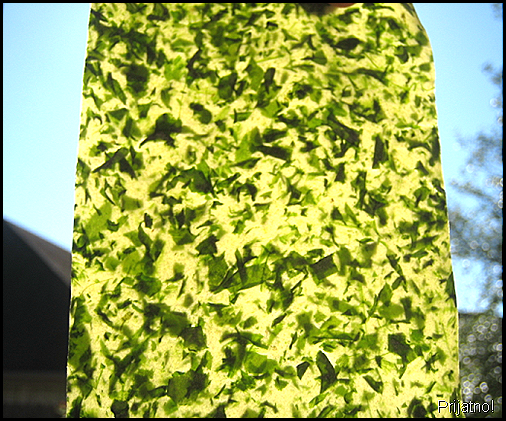
Making the lasagne was a lot easier than I expected. Only three ingredients are needed – eggs, spinach and flour. I used frozen chopped spinach, squeezed it well to remove excess liquid and chopped it by hand (and not a food processor), so my spinach was more on the chunky side:

DBlasagne1

But look at what I created! A beautiful green sheet which reminded me of stained glass when held up to the sun! The goal was to get the lasagne as thin and transparent as possible. D’ya think I succeeded?

DBlasagne4

I chose to roll the dough using a traditional rolling pin and my brute strength (of which I have none!). Fortunately, I was aided by a live broadcast from the Metropolitan Opera of Wagner’s Nordic epic Das Rheingold. I had gods, thunder, and fire coursing through my veins as I pushed, turned and pulled the dough. Live from the Met – your timing was perfect!

Lasagne sheets were left to dry for a few hours:

DBlasagne3

The béchamel sauce was also simple to make using butter, flour, milk pepper and freshly grated nutmeg:

DBlasagne2

The ragu (meat sauce) was to die for! It took about 4 hours to make from beginning to end and included amongst other ingredients pancetta, beef, pork, prosciutto and sweet carrots. Surprisingly there was no garlic and no herbs, yet it had so many levels of flavor, with wine uniting them all. The wine was the key ingredient in the sauce, in my opinion, and here is a good example of why one should use quality wine when cooking. Husby was kind enough to open a Rabbit Ridge 2002 Paso Robles L.P.R. Grand Reserve. It was sooo yummy and jammy and fruity, I sipped, chopped and stirred…then I sipped again! I lived up to my license plate frame my daughter bought me that says:

I love to cook with wine. Sometimes I even put it in the food!

The end product was a ragu I’ll be making many times, using quality wine, of course!

Assembly was easy. I chose to bake the lasagne uncovered because I love a crisp and toasted cheesy top! Served with red wine…

DBlasagne6

Prijatno!